






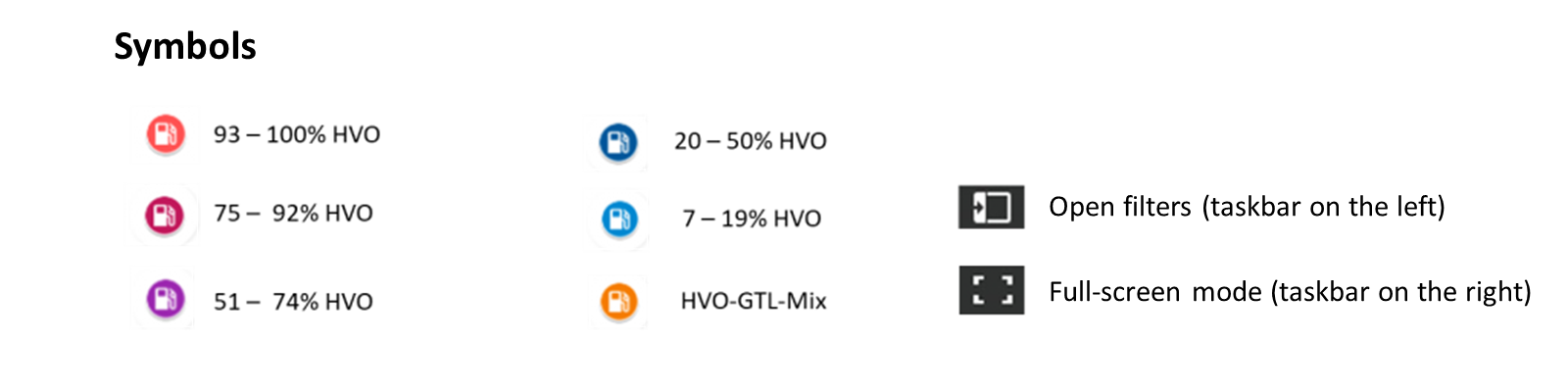
The following map, created by eFuelsNow, shows gas stations offering HVO/XtL diesel. These are not e-fuels (PtL). However, they are also synthetic fuels („reFuels,“ with an R!). It is NOT biodiesel! It is a fuel that reduces CO₂ emissions by up to 90% and also achieves cleaner local combustion..Another advantage (for most models) is smoother engine operation and slightly improved performance. HVO is produced from a wide variety of biogenic waste materials (not just used vegetable oil!). The map is updated regularly and to the best of our ability. If you discover a new gas station, if an address is missing, or if you have any questions, please let us know (info@efuelsnow.de). The map data is copyrighted. New stations are added almost daily, and important information regarding payment methods, blending levels, etc., is subject to change.

More technical informations about HVO you find here
Here you find an overview in German language with pictures of all pumps in worldwide Worldwide Pump Overview (PDF)
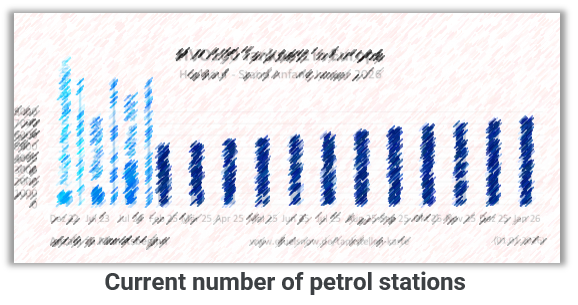
Between September 2024 and June 2026, the number of stations doubled. Currently, around 150 to 200 filling stations are being added each month. The main drivers so far have been Spain and Italy. Worldwide, we estimate there are well over 25,000 stations (HVO100 and HVO blends).
By 2026, over 2,400 stations in Germany will be offering HVO100 or HVO blends. Every sixth petrol station in Germany offers diesel containing HVO. The figure is likely to be even higher, as we do not know the exact HVO content of all the products on offer. Diesel drivers can therefore already reduce their fossil fuel footprint nationwide.
Germany is only in the middle of field when considering the roll-out of the HVO refuelling network. Unnecessary regulatory requirements are holding back CO₂ reduction in the transport sector. E5 gasoline blocks valuable storage capacity that could be used for HVO, whilst it has often already been phased out abroad. Almost all petrol-powered cars registered today can run on E10 without any problems. For sceptical motorists, additives could be offered – much as was the case following the phase-out of leaded petrol in the late 1990s.
If you would like to know where most of the HVO filling stations are located and where the densest network of filling stations is, scroll down to tab 8. There you will find slides from an analysis of the filling station network based on figures from May 2026.

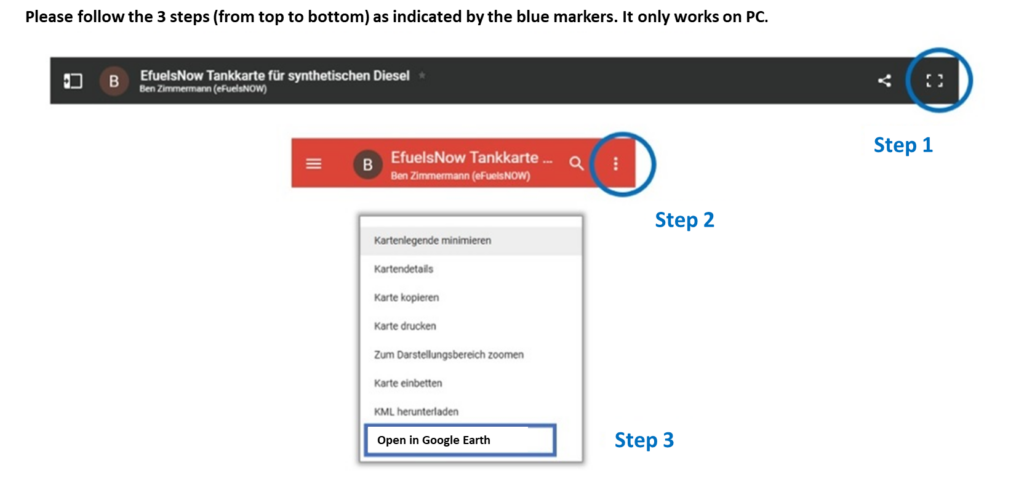
Virtual map in Google Earth
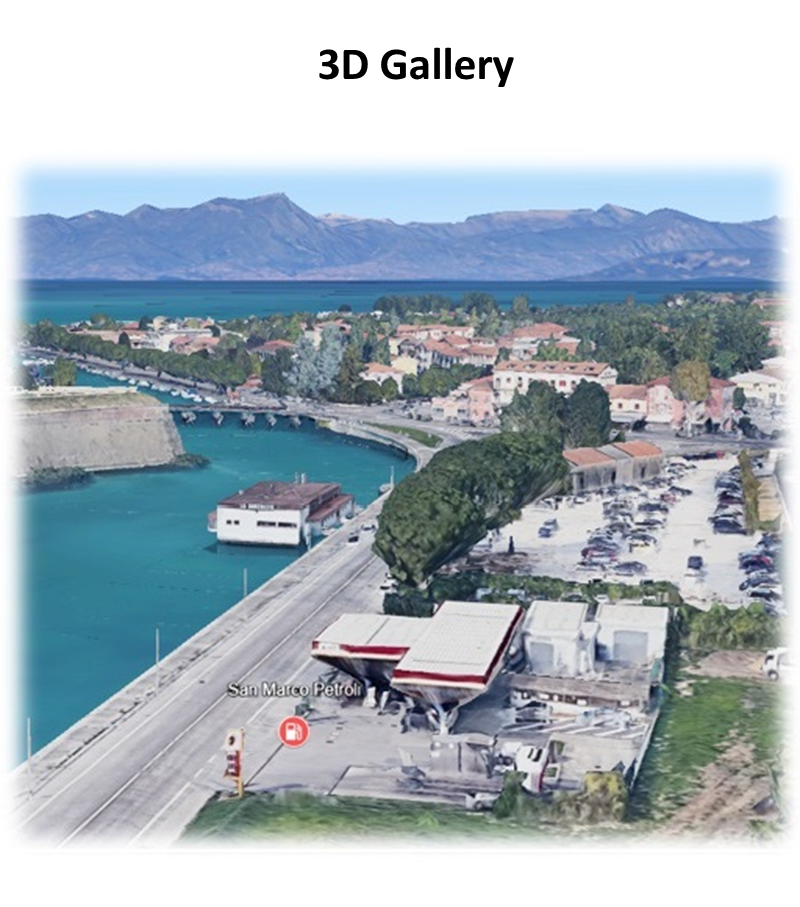
You can also view the fuel map in 3D using Google Earth. You can virtually fly to each individual station, just like with a drone! You’ll find more detailed information below the fuel map. => Link.
Up-to-date HVO100 fuel prices in Germany can be found at Clevertanken (PC + App). Prices for Italy can be found at Prezzi Italia (App). An approximate, averaged price overview for various countries can be found in tab 11. Our fuel station map is also integrated into the comprehensive „HVO100 goes Germany“ website. It is used by renowned universities, such as the reFuel department of the Karlsruhe Institute of Technology (KIT). The primary purpose of the map is to allow researchers to observe the ramp-up of the tank network. That was the original intention behind the map.
Partners


Our virtual fuel card currently lists only synthetic HVO/XtL fuels (and no eFuels). HVO is not an eFuel. However, both fuels belong to the group of synthetic reFuels. They are different, yet share clear simiPlease read before using the map:
- Important: The map is primarily aimed at the academic and political communities. Motorists are very welcome to use it. However, finding petrol stations is only a secondary function! It was created by one person, driven by personal, intrinsic commitment and passion. My aim is to support the work of universities in raising awareness of this important issue..
- For mobile searches, we recommend our Apple and Android apps. Please make sure you read all the station information and familiarise yourself with the fuel pump overview before you set off!! You can find the station information by tapping the relevant station icon on the map.
- The overview of pumps shows, with pictures, how to identify an HVO100 pump or a pump dispensing HVO-blended fuel. HVO100 is always labelled ‘XTL’. However, HVO-blended fuel may also be labelled ‘Diesel B7’. HVO-blended fuels are not always recognisable from the outside.
- We obtain all our information either from the websites of the major companies, from data sheets, or directly from the petrol station chains themselves. The cashiers often don’t know what’s in the products. We also have contacts outside Germany. I have personally visited many petrol stations, including some in North America. Nevertheless, it is not possible to provide all information (price, payment methods, technical faults, exact opening date) on a daily updated basis. Therefore, this is a secondary feature, of good quality, within the limits of what is feasible. We welcome your on-site information as well. info@efuelsnow.de .
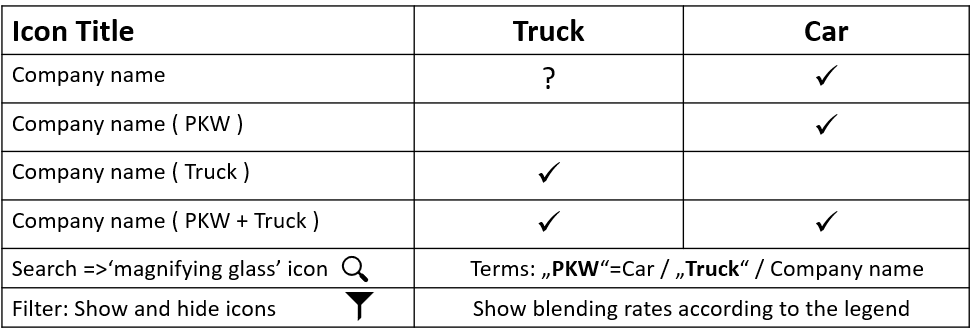
- The icon headline indicates whether the station is for cars or trucks (see table). Cars can also refuel at truck stations. In our Apple and Android apps, you can use the search function to find specific car and lorry stations (search = magnifying glass icon).


The map is created by one eFuelsNow group member out of deep passion and inner conviction.
In the following text, the creator of the map explains his motivation:
As an engineer, you work with scientific principles throughout your studies and career. It’s a creative profession. As an engineer, I want to utilize all available technological possibilities for the benefit of the environment and our customers. As a passionate driver, I’ve traveled through many countries where renewable fuels like HVO have been available for years. I’ve noticed that German „climate protection“ organizations and their political representatives have been complaining about CO2 emissions from transportation for a long time. At the same time, however, they are blocking all technological solutions. This is why many people are asking serious questions. Is this even about climate protection, or is it about something else? HVO100 has been available at gas stations in Northern Europe and California since around 2013. However, it wasn’t allowed to be sold in Germany until May 2024. Technically unfounded justifications were given for this ban. Similar patterns can be seen in other areas (e.g., the years-long blockage of climate-neutral CCU/CCS power plants, or the incomplete consideration of CO2 and efficiency in vehicle propulsion systems, including vehicle and infrastructure footprints, electricity generation, etc.).
The primary purpose of the map is scientific, to assist universities in observing the tank network. At the same time, it aims to make the supposedly „non-existent refueling stations“ clearly visible to everyone. Measures to reduce CO2 emissions must be evaluated honestly again. This means focusing on energy, according to market and scientific principles. Climate protection has to do with energy, but nothing to do with powertrain systems. Every powertrain can be decarbonized. However, not every powertrain is suitable for every customer. Only an honest perspective can counteract the socialist instrumentalization of environmental protection.
And that brings us to a very, very important issue: strengthening the social market economy. The honorable cause of environmental protection must not be allowed to degenerate into a socialist bludgeon.
The photograph of the man pictured below comes from my own photo album. I know firsthand what our legendary German Minister of Economics and Chancellor Ludwig Erhard’s goal was: to provide honest help to the worker. Because in our West German capital, Bonn, they understood that honorable causes must not be exploited. The dishonest and failed counter-example from the Eastern Bloc is still well known. That is precisely why, today, we must also provide honest help to the environment (and to the worker). The word „minister“ comes from „to serve“ (Latin „ministrare“). In a market economy, the state service provider sets the goals exclusively in consultation with its client (the citizen). Customers and engineers decide individually on the path to achieving them. In market competition, the best product always wins because only application and product experts make the decisions. A counter-example: In countries with planned economies characterized by shortages, state intervention in the market was also misused as a monopoly of power („Only if you are obedient will you get what you want.“). This is diametrically opposed to the values of an enlightened Western society in the 21st century. There’s no need for rationing when there’s more green energy available globally than the world needs (see also the DLR graphs). You simply can’t save the global climate with scarcity. Environmental protection requires money and people willing to participate. Therefore, we need to return to thinking more like Ludwig Erhard. We need more tolerance for diverse technologies, as well as customer focus and a pragmatic approach. We need more. We need to return to the approach that made West Germany and Western Europe successful.
This card is dedicated to the person who taught me all these connections (my grandfather) as well as to the father of the social market economy, Ludwig Erhard (whom he knew personally).


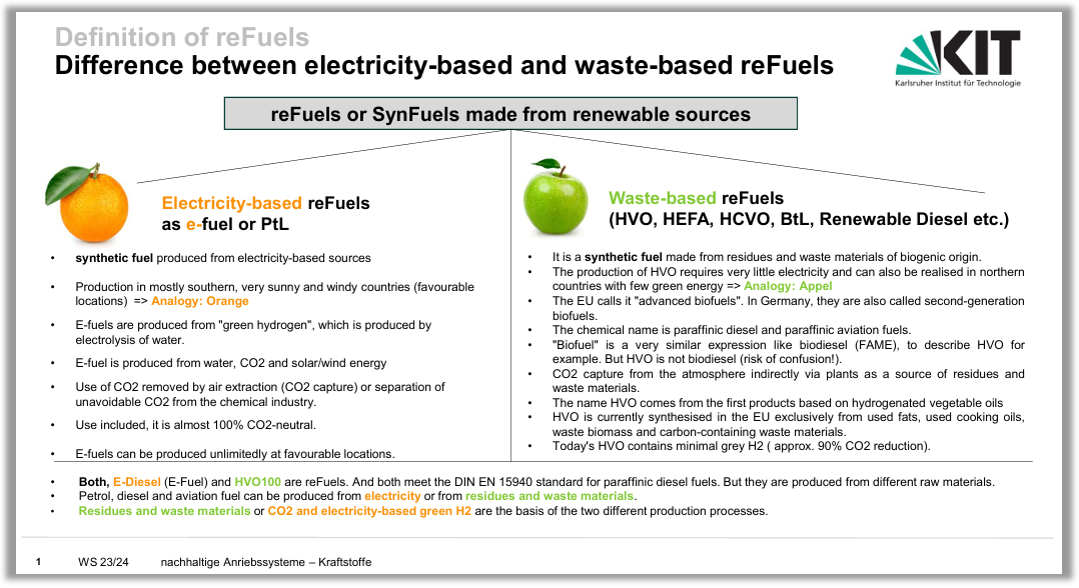
Our virtual fuel card currently lists only synthetic HVO/XtL fuels (and no eFuels). HVO is not an eFuel. However, both fuels belong to the group of synthetic reFuels. They are different, yet share clear similarities. Both eFuel and HVO (as diesel) comply with the DIN EN 15940 standard. In the future, there will also be a kind of „hybrid“ fuel (see waste-based eFuel, Hamburg University of Applied Sciences). The graphic from the Karlsruhe Institute of Technology (KIT) provides a clear illustration to distinguish between the terms. It is very important to note: This is not about biodiesel or ethanol! These are first-generation biofuels that, in their pure form, are generally not compatible with vehicles and require engine modifications. ReFuels are not aggressive. They can be used in their pure form.
Image of the Karlsruhe KIT (Abteilung reFuels, Dr. Toedter)
- E-fuels are produced in sunny and windy, mostly southern countries (analogous to Orange)..
- Waste-based fuels require very little electricity, therefore they can also be produced in northern countries (analogy: apple).
Contrary to popular belief, there are only „one or two mini-plants“ for the production of e-fuels. There are now a growing number of them, see the worldwide map.

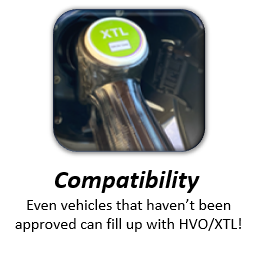
The only difference is the approximately 6% lower density of HVO100 diesel fuels (DIN EN 15940), due to the absence of aromatics. HVO meets or exceeds all other specifications. This also applies to lubricating properties, as HVO is always blended with additives by the fuel manufacturer as standard. This is required by the DIN EN 15940 standard. Particularly due to the absence of aromatics, HVO is the significantly higher-quality fuel, which burns more cleanly and causes less carbon build-up in the engine. Furthermore, many engines run much more smoothly and perform better under acceleration.
In short: blends of up to 26% HVO comply with the DIN EN 590 diesel standard, under which all diesel vehicles are currently approved. Above 26% HVO, compliance with this standard becomes highly uncertain, and is no longer possible at all from 45 to 50% onwards. In some countries with very high blends, such as California or the Nordic countries, the proportion in standard diesel fuel can be far higher (see the image from Circle K Norway). There, standard diesel contains up to 40% HVO. In California, most 76 petrol stations now only sell HVO (‘Renewable Diesel’) with an HVO content of around 95 per cent. Naturally, not all diesel vehicles in these countries have been approved under the new standard either. Nevertheless, no problems are known – even though the fuel has been on sale there for over ten years.
HVO100 in Practice: Why the fuel works even without official manufacturer approval
While large institutions must strictly adhere to manufacturer approvals for administrative reasons, we speak as engineers with years of practical experience: We have been fueling our private vehicles with HVO for hundreds of thousands of kilometers—almost all of them without official approval. Ultimately, it is up to each customer to decide, but ‚common sense‘ goes a long way. One of our own vehicles has already covered over 240,000 kilometers without any approval.
HVO is not biodiesel HVO is a latest-generation synthetic fuel. Unlike conventional biodiesel (FAME), it is extremely compatible, aging-resistant, and immune to diesel pest. It is non-corrosive and therefore perfectly suited for use as a pure fuel.
Compliance with Standards and Quality : HVO100 sold at filling stations must comply with the DIN EN 15940 standard. The only significant difference compared to fossil diesel (DIN EN 590) is a roughly 6% lower density; all other requirements are met or exceeded. Thanks to prescribed additives, HVO offers excellent lubricity properties well within safe parameters. Compliance with the standard is regularly monitored.
Global Long-Term Experience : In countries like Norway and regions like California, HVO has been sold in massive quantities since the 2010s. In California, its market share in the diesel sector recently exceeded 65%, while in Norway, standard diesel often contains up to 40% HVO (well above the regular standard limit). This has never led to any resulting engine damage. The inventor of HVO, Neste, emphasizes its suitability for all diesel engines, and Scandinavian filling stations explicitly market to older vehicles with the slogan: ‚Don’t change the vehicle, change the fuel.‘
Scientific Validation
- Karlsruhe Institute of Technology (KIT): Confirmed absolute trouble-free operation in an 800,000 km endurance test with logistics companies.
- Saarland University: Numerous tests were also completed with positive results at the institute of Prof. Heintze.
- Engine Remanufacturers: Praise the cleaner combustion, which minimizes carbon deposits and reduces the load on the exhaust aftertreatment system (confirmed, among others, by engine analyses after 60,000 km).
As a general rule: Despite intensive research, we are not aware of any problems regarding vehicles with Common-Rail or Pump-Düse (unit injector) injection systems that lack official approval. These account for approximately 99% of the vehicles currently registered. A seamless recertification of all existing older vehicles fails purely due to bureaucratic and financial hurdles. History shows that standards evolve alongside technical progress: vehicles built before 1993 were manufactured according to the old DIN 51601 standard for high-sulfur fuel—they would have to be grounded today if we rigidly adhered to old standards. Even manufacturers themselves use the fuel for their classic cars without official approval (e.g., BMW with an E46 Coupé on the „Tour d’Europe“).
The focus is turning to older vehicles and classic cars built before 1998. These vehicles, which are at least (or nearly) 30 years old, are typically equipped with mechanical or electrical rotary or in-line injection pumps. Today, they account for a maximum of only 1% of all registered vehicles. Even these vehicles only need to be prepared for HVO in very few cases, as proven by the intensive use of HVO on classic car rallies (see also here and here).
The following applies to such classic and modern classic cars (Oldtimers / Youngtimers):
- Not a single case of engine damage occurred due to HVO100. In all instances, the vehicle could be made „HVO-Ready“with simple modifications.
- Gaskets: Fossil fuel contains aromatics, which cause gaskets to swell during their service life. In isolated cases, these gaskets can shrink back down and leak after switching to HVO. Solution: In this scenario, you simply install new gaskets—for example, on the fuel pump—and exclusively use HVO from then on. The vehicle will then remain leak-free. The critical materials were optimized between 1995 and 1998. We are aware of only a very few cases.
- Injection pumps: For vehicles with a mechanical fuel pump, a minimal adjustment of the injection timing (start of delivery) may be useful in isolated cases to ensure full power output. Such pumps were installed until the early 1990s.
- Practical proof: Despite occasional initial concerns, one thing is certain: operating pre-chamber engines is also completely safe. Whether it is a Mercedes W123 (built in 1982) in our own eFuelsNow fleet, historical tractors, Unimogs, fire engines, or at classic car rallies—HVO works flawlessly everywhere. Research institutions (such as the KIT, among others) have investigated HVO compatibility in pre-chamber engines. Despite intensive studies, the researchers are not aware of any problems whatsoever.
An overview of the benefits of HVO100:
- Quieter engine operation (especially in older engines)
- Cleaner combustion, less soot, and reduced strain on the exhaust system (in some cases, lower AdBlue consumption)
- Up to 90% lower CO2 emissions (within the greenhouse gas lifecycle)
- Significantly reduced local emissions: -9% nitrogen oxides (NOx), -33% fine particulate matter, -30% hydrocarbons (HC), -24% carbon monoxide (CO)
Conclusion: The issue of official approval primarily affects new vehicles during their warranty period—even though the risk of engine damage is demonstrably lowest when using HVO. Furthermore, nearly all modern diesel vehicles are now approved for HVO/XTL straight from the factory. Ultimately, the choice is up to the individual.
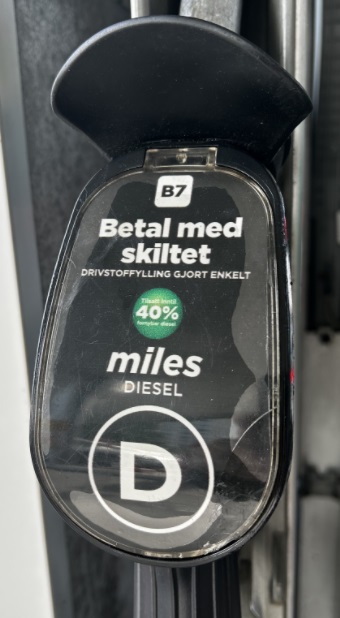
Standard diesel in Norway contains up to 40% HVO (according to previous standards, only 26% HVO is permitted). Is it still possible to drive to Norway without risking engine damage?

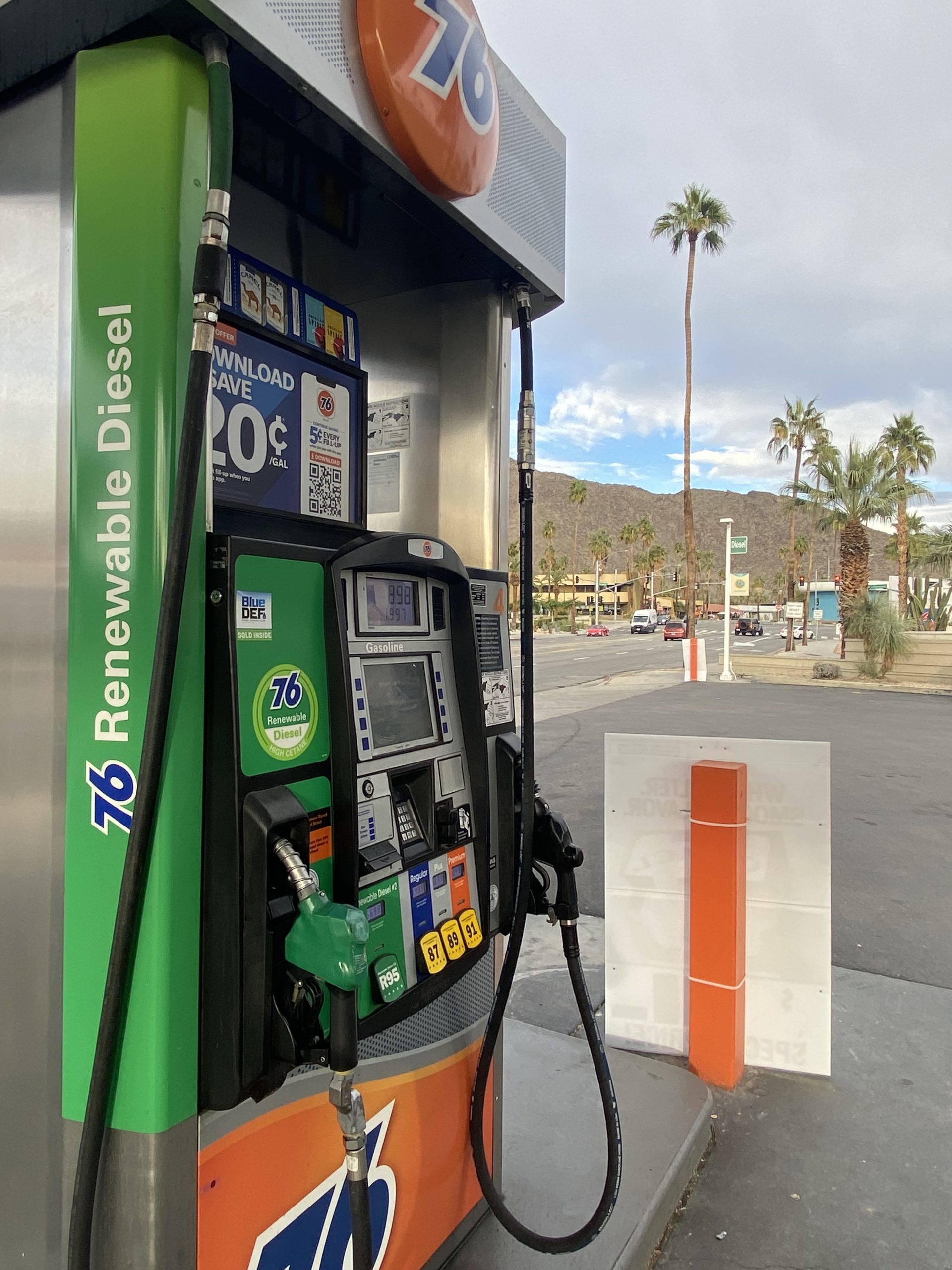
At most Californian 76 stations, you will now find only a single diesel pump containing Renewable Diesel (HVO95). Where are all the non-approved vehicles fueling up now? There are no issues.
According to experts such as Prof. Willner (HAW Hamburg) and the reFuels department of the Karlsruhe Institute of Technology (KIT), the feedstock potential for HVO production is still far from being exhausted. In spring of 2026, KIT published a renowned study showing that the entire European demand could be covered by waste-based fuels. This does not even take into account the additional potential of electricity-based e-fuels.
Regarding possible production volumes, here is a quote from an article by SpringerNature (including an interview with Prof Willner):
According to an estimate by the Finnish group Neste, if all waste materials were utilised and production capacity fully utilised, up to 1,000 Mt of renewable fuels could be produced annually by 2040. This corresponds to approximately 40 per cent of global transport demand (road, sea and air). These figures are also in accordance with research carried out by Professor Dr Thomas Willner from the Department of Process Engineering at HAW Hamburg. Furthermore, according to a study available to Willner, there is still significant potential for HVO production of around 200 Mt per year from jatropha. Jatropha grows in desert fringe areas on marginal soils. This quantity of HVO derived from jatropha oil could meet the fuel requirements of the entire EU. A well-developed public collection system for bio-waste that can be processed into fuels already exists in some Italian municipalities. HAW Hamburg is working on decentralised plants that can be deployed directly at waste recycling facilities. Willner also emphasises the high energy efficiency of HVO. As there is a great deal of energy in the waste, little electricity is required during production. Driving on it is therefore more energy-efficient than driving an electric car. Swedish environmental authorities even rate the fuel as having by far the greatest climate impact, as climate protection measures can be implemented immediately. HVO is the time-, cost- and resource-efficient climate protection solution for transport.
Press release from Neste on the availability of raw materials (Sources: Neste (text below the video), a presentation at the IAA Commercial Vehicles trade fair, and an article in AutoBild from August 2023)
The simple scaling of renewable fuels clearly shows that a planned-economy-style rationing of fuel for shipping and aviation is totally unnecessary. This is partly because, when aviation kerosene is produced, fuel for road transport is automatically generated as a by-product. Focusing on niche sectors within the aviation and shipping sectors would slow down the scaling up of large-scale industrial production facilities. After all, what matters to investors is a quick return on investment. Last but not least, every car driver subsidises their next flight ticket at the petrol station. As a result, the cost-sensitive aviation and shipping sectors can deliver goods more cheaply and economically.
Interviews with Prof Dr Willner can be found in the videos below. In the first clip (taken from a lecture), he discusses, amongst other things, the issue of raw materials.
Overall, the development of HVO is very dynamic, which has already led to a very dense network of filling stations in some countries (see travel reports here and here for data). Between September 2024 and May 2026, the number of filling stations doubled! The main players are primarily Italy and Spain, but other countries are also involved. Lithuania, Ireland, the Czech Republic and Austria have recently expanded their refuelling networks massively. Germany is lagging behind somewhat. HVO100 has only been officially approved for sale in Germany since 29 May 2024. The fuel was artificially blocked here for quite some time and even kept somewhat under wraps, even though it has been available in some countries since around 2015. Whilst Super E5 has increasingly been phased out in many countries, it is still tying up much-needed refuelling capacity in Germany. And this is despite the fact that 95 per cent of all petrol-powered vehicles can now run on E10. The remainder can be made compatible with it using additives.
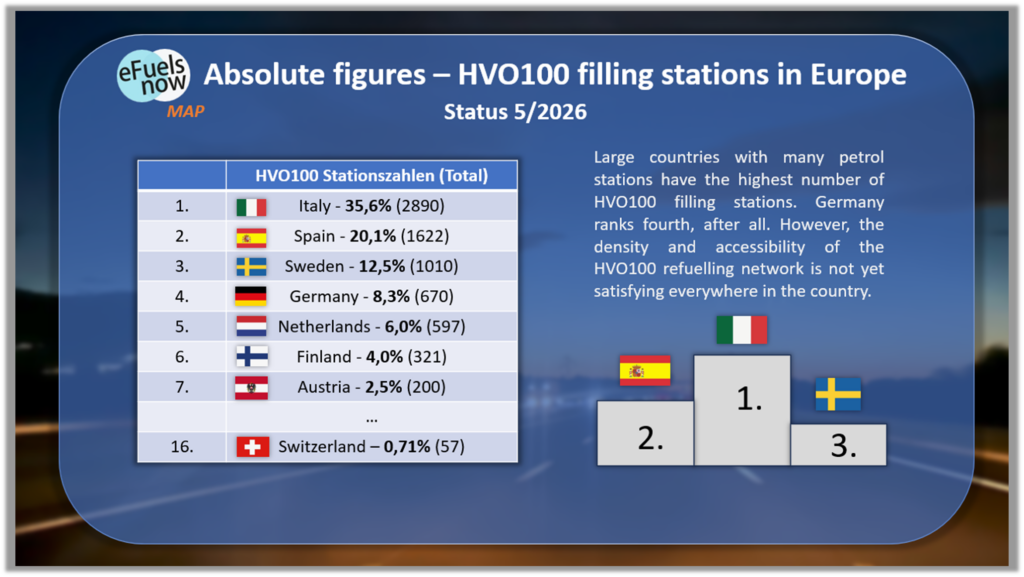
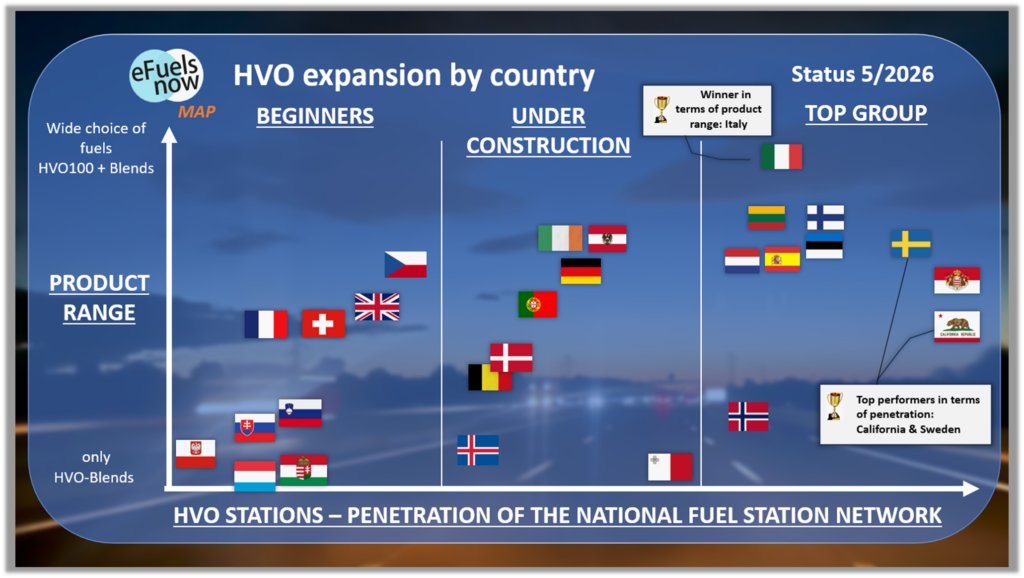
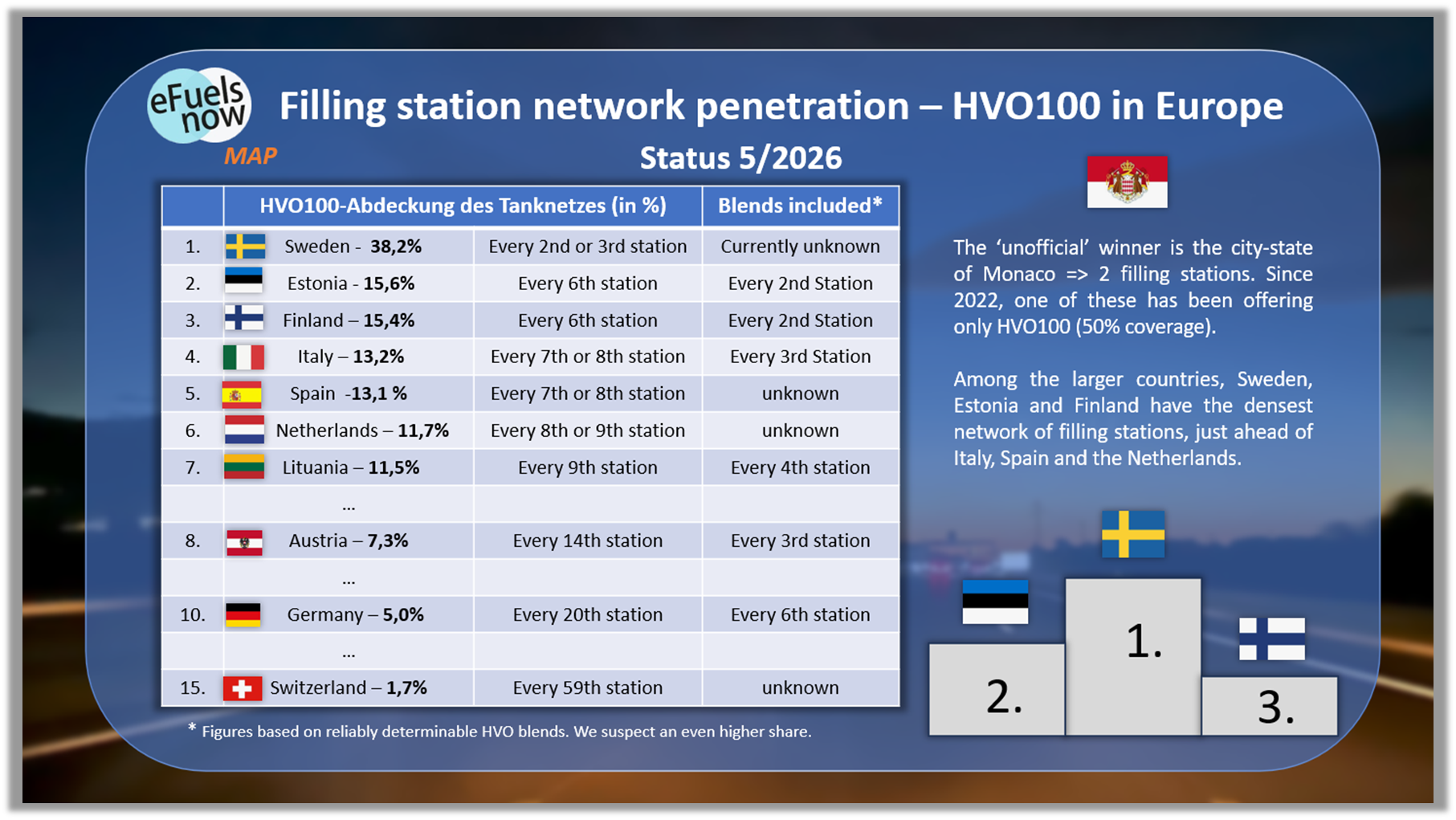
The following slides, dated from May 2026, show which countries have the most petrol stations. They consider different perspectives
- Product range (HVO100 and/or HVO blends)
- Total number of HVO100 stations
- Penetration of the national refuelling network (HVO100 + HVO blends)
The absolute top players in the roll-out of the HVO refuelling network are:
- Sweden
- California
- Italy
- Spain
- Estonia
Germany and Austria are in the middle of the pack, on a par with Portugal and Ireland. The HVO100 filling station network is unevenly distributed across the country. However, due to the high number of blended fuels (particularly ARAL Ultimate), HVO is available even in remote areas (one out of six filling stations sells HVO100 or HVO blends). In Eastern Europe (excluding the Baltic states), the refuelling network is still relatively small. The Czech Republic, however, is beginning to catch up with the mid-table countries. An HVO100 station is already available in almost all major cities.
Click on the images to enlarge them!
Die Karte erfreut sich mittlerweile großer Beliebtheit. Anbei ein paar Antworten zu Fragen, die uns gestellt wurden.
a) Why can’t I find any e-fuels on the eFuelsNow map?
The name “eFuelsNow” may be confusing for some users. It comes from the name of the organisation that created it: the registered association eFuelsNow e.V. Nevertheless, the spelling alone makes it clear that this is about something else. This is because the electricity-based fuel is spelled differently: E-Fuel (with an ‘E’ and a hyphen). Furthermore, we cannot simply change the registered name of our association. Nevertheless, you can be sure that as soon as the political objections have been resolved and E-Fuels become available, this app will be the first place where you’ll find the new fuel. Until then, the app will display related products. This is because HVO diesel fuel and E-Fuel diesel fuel are both synthetic diesel fuels in accordance with DIN EN 15940. Furthermore, HVO and E-Fuel both belong to the main group of reFuels.
b) There are too many stations. Could you limit the map to Europe (or HVO100)?
There is no one-size-fits-all solution. Every user is looking for different fuels. Continuing to offer blended fuels makes it possible to refuel in a climate-friendly way even in places where HVO100 is not yet available. Furthermore, these blends are of great interest to the scientists for whom the map was primarily created. Both the app and the Google view allow users to filter results as required.
c) Are there any stickers?
I’ve made a few stickers myself and I’ve still got a few left. You can get in touch at info@efuelsnow.de
d) Will HVO100 also be available at large fuel retail networks?
This is already the case in Europe (see Spain (Repsol), Italy (ENI, Tamoil) and Scandinavia (Circle K, Neste, OKQ8)). The energy companies in these countries do not own any oil platforms, which is another reason why the use of renewable, synthetically produced fuels is of interest. However, government regulations play the key role. And here, a clear contradiction can be observed between loudly proclaimed demands for climate protection on the one hand, and the active obstruction of climate protection measures on the other. Why this is so is something that our descendants will probably only ever find out.
e) Have you visited most of stations yet?
You can’t visit every petrol station. But YES! I regularly go on long HVO refuelling trips and have travelled extensively throughout all regions for this purpose (including the USA). The same applies to my companions, who are also frequently ‘on the road’, and to some followers with which we regularly exchange messages. Naturally, we get information from them as well.
f) Where do you get all that information about petrol stations from?
Over the years, I have built up a good international network, through which I regularly enquire about changes to fuel blends and the refuelling network. I also search around 20 databases almost every week. Not everything changes all the time, of course.
g) Why did you create this fuel map?
As mentioned in the ‘Extra’ tab, I am motivated by the ongoing misinformation regarding the availability and technical aspects of synthetic fuels. Many arguments – such as efficiency – are often presented in a simplified manner. Efficiency is not an end in itself, but must be considered holistically: alongside electrical and system efficiency, costs, time and resources also play a part. In all these respects, HVO is a highly efficient solution, as the energy content of waste materials is high and the electricity required for production is low (see calculations by HAW Hamburg, Prof. Willner). To provide the public with technically accurate information, we engineers are working closely with the faculties of several renowned universities, for whom this objective dissemination of information is also a major priority.
h) Why are some people against liquid, climate-friendly fuels?
To answer this question, it is helpful to take a look at the debate: The rejection of liquid energy sources is striking, even though their ease of storage and transport makes them unbeatable for flexible global mobility. The impression arises that criticism of this energy source is often used as a leveraging tool to restrict individual mobility as a whole. Electricity is, after all, difficult to transport and store. The electricity system is designed for households and industry (not for transport). The resulting shift away from motorisation is rejected by the majority of the population, as it has serious economic consequences. Economic success and affordable energy that is available at all times are, in fact, the very foundation of effective environmental protection – as negative historical examples (such as the GDR) have impressively demonstrated. Our association is open to all technologies. Every technology has its pros and cons, but the physical principles must be formulated technically correctly. We focus on market-based solutions so that engineers can develop offerings tailored to customers’ real needs. As many critics do not fully understand the long-term consequences, we believe in open, respectful dialogue. We want honest, people-centred environmental protection that everyone can participate and that respects people’s fundamental needs.
i) HVO still emits CO₂ at the other end. So isn’t it still bad for the climate?
Climate-friendly synthetic fuels are based on the principle of the circular economy – a closed cycle, such as we find everywhere in nature. Carbon itself is not the problem here; what matters is its origin. It cannot come from ancient fossil sources and be released into the atmosphere as well. If that happens, the CO₂ cycle is disrupted. The CO₂ released during use must have been captured beforehand – a principle that the well-known engineer and author Wolfgang Maus has already described in detail. Around ten per cent of Germany’s green electricity is already generated in a similar way (e.g. via biomass). It makes no difference whether the thermodynamic process takes place under the bonnet or on the outskirts of town. Combustion processes account for around 80 per cent of global energy conversion in the primary energy sector. They cannot be substituted. Nor are they necessarily harmful to the climate. For this reason, the term ‘decarbonisation’ should definitely be avoided and the term ‘defossilisation’ used instead. A completely carbon-free ‘decarbonised’ world would not be biologically or technically viable. A simple comparison illustrates this: we humans ourselves are also part of such a CO₂ cycle. We utilise the energy of an apple that has just grown on the tree by absorbing CO₂ from the air we breathe.
Most fueling points on the map have a nozzle for passenger cars (estimated at 80-85%). As a car driver, you should ideally use these. However, the distribution also depends on the country. For example, in England and France, you might only find truck-specific fueling options in your immediate area. Similarly, in Germany, you will find many ARAL stations near highways offering HVO, but it is dispensed at truck pumps. How can you refuel a passenger car using these?
Preface:
- As the creator of the map, I will describe my own approach below, without promoting it in any way. It is entirely up to you to decide what to fill up with and how. I’m unfortunately obliged to add that! This is simply a personal experience report.
In basic terms:
- Even if some people are sceptical at first: I’ve never had any trouble filling up any private car at a truck stop. In every case, the refuelling process was easy and went without a problem.
- Important note: Some truck stations require a fleet card. You can find this information in the icon details.
- The HVO fuel that you can fill up at truck service stations is also suitable for passenger cars… The official fuel standard DIN EN 15940 applies to both passenger cars and trucks.
Procedure:
- Older vehicles, built before 2015, often have a large fuel filler neck that is easily compatible with a truck fuel nozzle (see picture). The fuel lever should be moved carefully (1–2 millimetres) to ensure that no more fuel comes out than usual. As the lever is very stiff, it is easy to avoid the fuel flowing out too quickly. The shut-off function works reliably without overflowing.
- I have filled newer vehicles (built after 2015) using a funnel. In this case, the automatic shut-off mechanism does not work. You need to know the tank capacity and should avoid filling it to the top. Otherwise, a little will spill out via the safety valve. HVO is bio-based, so this isn’t too much of a problem (hazard class 1). In my experience, spillage is easy to prevent.
- The canister method: At the beginning, I actually filled a canister using the truck’s nozzle. That’s the slightly more ‘discreet’ method for shy people!
- If in doubt, I’d let the cashier know beforehand. So far, nobody’s had a problem with me filling up at the lorry pump. I didn’t feel bad about it either, as I know that some petrol station owners do exactly the same.
About the adapter:
- The vehicle pictured below (a 2022 Range Rover Evoque) already had a suitable adapter in its on-board tool kit. Similar products can be found online or at ATU or Norauto. A 3D-printable funnel file can be found via this link.
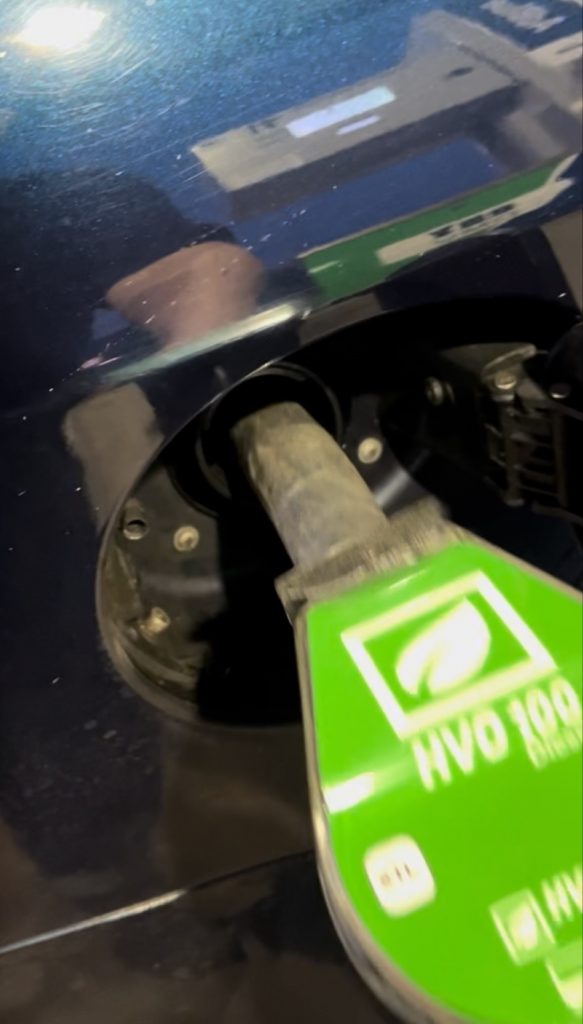
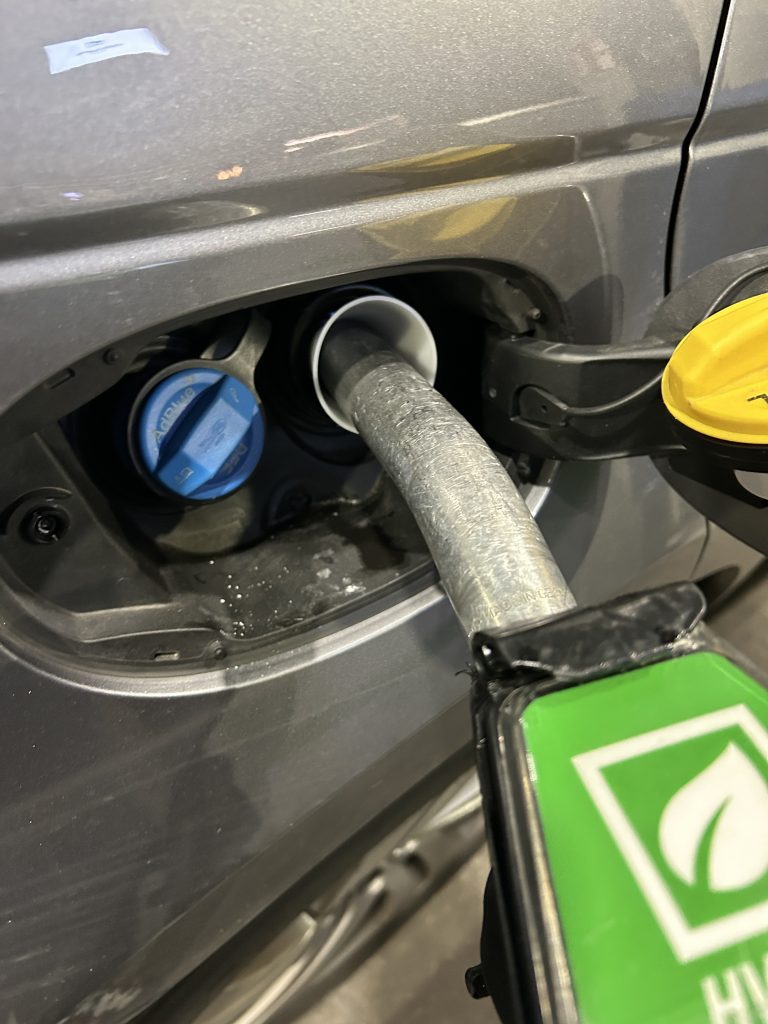
Picture in the middle: Refuelling the Range Rover Evoque L551 using a funnel (models from 2015 onwards)
Click on the image to enlarge it
–

Picture on the top: A filling adapter similar to the one found in the Land Rover vehicle tool kit is available from A.T.U, Norauto and online.
All pictures: eFuelsNow e.V.
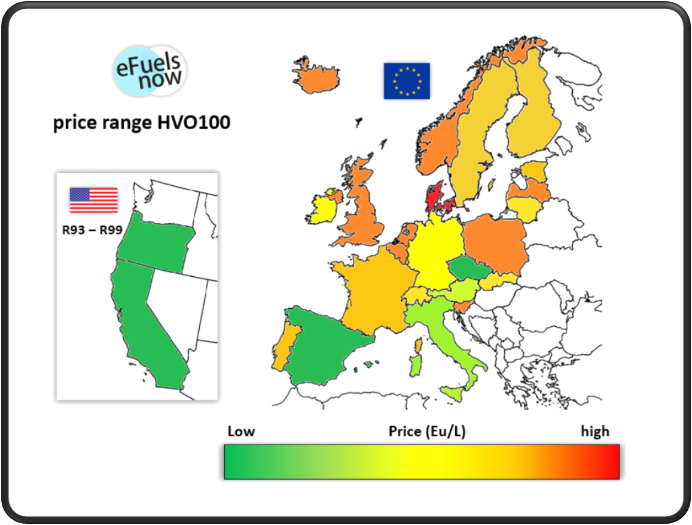
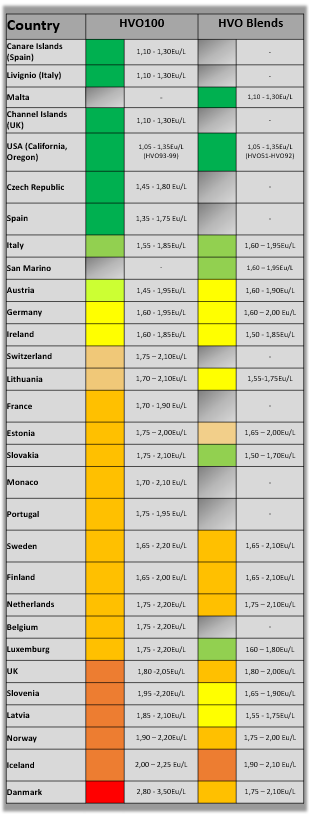
General: Overall, HVO100 delivers the greatest cost-benefit impact in terms of CO₂ savings per euro and per unit of time. This is quite logical, as it makes use of existing vehicle and infrastructure technology. Of course, fossil fuels are always the cheapest option. But in most countries, HVO is priced at an affordable level, only marginally higher than standard diesel.
Cost accounting: When calculating total costs, it must be considered that both the vehicle and the infrastructure can still be used. Furthermore, we’re only talking about cents per litre… How little that actually is can be seen from a calculation by the Association of German Motorists (ADAC) – see the link. The additional cost ranges from approximately 5.62 euros per month to 6.75 euros per month. That is significantly cheaper than a new car. Furthermore, a worst-case scenario was used in the calculation. Even with a completely exaggerated and unrealistic surcharge of 50 cents per litre, the additional cost amounts to just 31.25 euros per month (based on an annual mileage of 15,000 km / 9370 miles). Bear in mind that HVO helps prevent engine contamination. A new EGR system can easily cost 800 euros.
Prices at petrol stations: You can find approximate prices in the overview below. Naturally, this does not take into account unforeseeable price rises due to political crises (or similar circumstances).

In some parts of Italy, HVO100 was even cheaper than standard B7 diesel and blended fuels. Recently, the price remains at the same level. Both photos were taken in Liguria (Savona and Ventimiglia) in May 2024. Images: eFuelsNow

The map (including the website and app) is freely available for searching for petrol stations and as a source for academic and journalistic purposes (source: eFuelsNow e.V.). You are welcome to link to our website. The reuse of the map data in other applications and its distribution to third parties is strictly NOT permitted. If you have any further questions, please contact us at info@efuelsnow.de
Copyright and database protection:
The content provided in this app/on this website, in particular the collection, organisation and daily updating of filling station data for HVO100, HVO blends and reFuels, is the intellectual property of eFuelsNow e.V. The map may be used to search for filling stations and as a source for academic and journalistic purposes (source: eFuelsNow e.V.). The reuse of the map data in other applications and its disclosure to third parties is not permitted.
Database producers’ rights (Section 87a et seq. of the German Copyright Act (UrhG)):
This map constitutes a database within the meaning of the Copyright Act. The creation, verification and ongoing maintenance of the data required a significant investment of time and resources. The extraction or re-use of substantial parts of this database (e.g. through ‘scraping’ or automated queries) is not allowed.
Restrictions on use:
Use of the data is permitted solely for private, personal use. Any commercial use, the integration of the map data into third-party systems (e.g. fleet management systems, navigation apps) or the commercial resale of the location information requires a separate licence agreement..
3. Technical protection
We reserve the right to take technical measures to prevent unauthorised access and, in the event of misuse, to take legal action and claim damages.

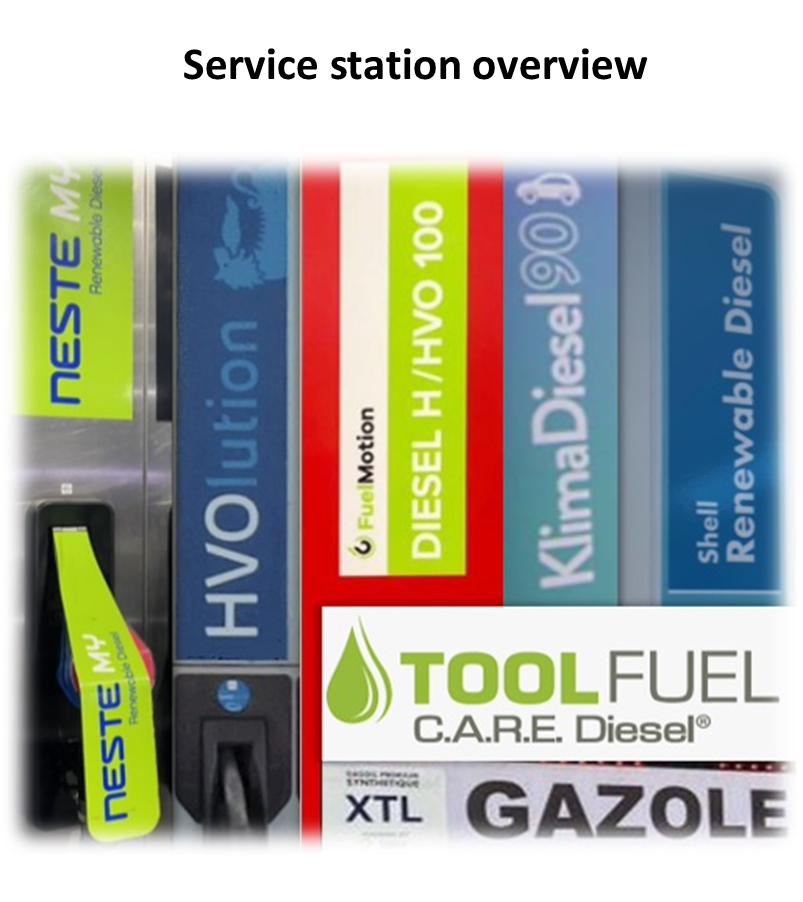

Icon on the Left: Overview of petrol pumps (PDF, in German language)
How can I recognise HVO? HVO100 is usually relatively easy to recognise. But it’s more difficult when it comes to blends. Even ‘Diesel B7’ can be a high-percentage HVO blend. Before you start refuelling with HVO regularly, you MUST see this document. Page 2 is particularly important, as it provides a visual guide to the identifying features! To view it, click on the icon on the left. The document also contains a country-specific overview with photos, as well as a tabular summary of available products.
Icon on the right: 3D image gallery (PDF)
A bit of fun and something to warm the heart ;-). Using Google 3D View, you can start preparing for your holiday and see what the HVO station looks like on the ground. You can fly over a great many petrol stations as if you were using a drone. You’ll find ‘directions’ to the virtual 3D world in the ‘Directions’ section below. From there, you can also access Google Street View and see photos of the HVO stations. The Google 3D View only works on a PC or laptop. However, you can also find 3D images in the PDF and below this text (click to enlarge).