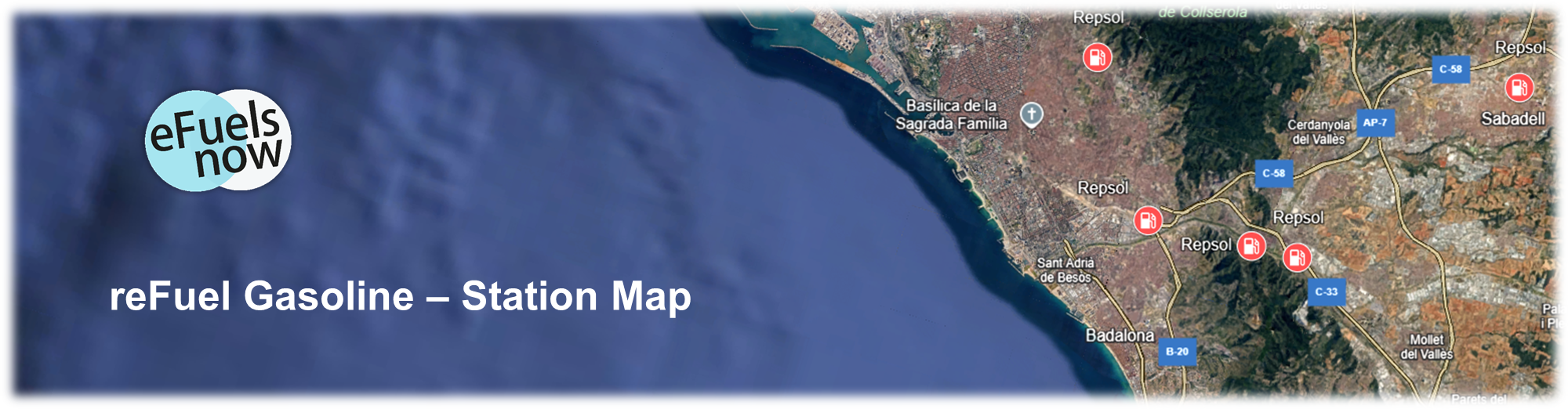




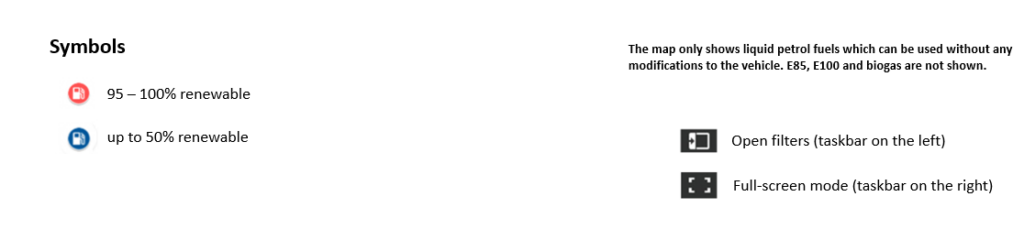
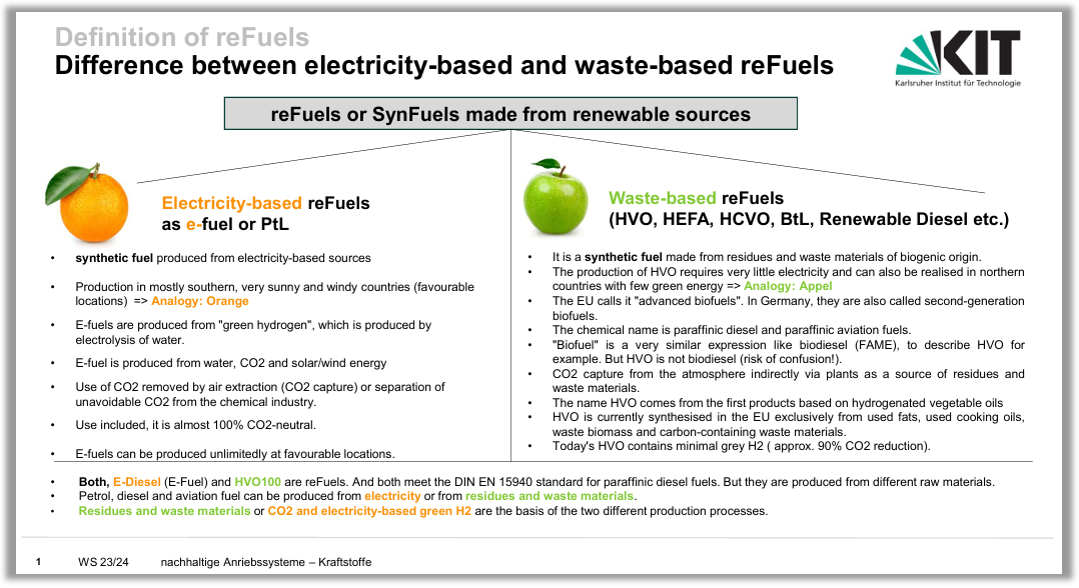
The following map, created by eFuelsNow, shows filling stations offering liquid reFuels for petrol engines. Generally, ‘reFuels’ can be either electricity-based or feedstock-based. The map shows only feedstock- or bio-based reFuels for petrol engines. Electricity-based reFuels (= e-fuels) are not included! To find out the difference between the two types of fuel, see the diagram from KIT in Karlsruhe.
The following reFuels are listed:
- Marked in red => Petrols based on bio-naphtha or biomethane (Super E10 in accordance with DIN EN 228 + bio-based reFuel)
- Bionaphtha fuels bear a certain resemblance to HVO due to their waste-based composition. However, the term HVO is only used in connection with diesel fuel. Bionaphtha itself is a highly compatible fuel, similar to HVO. Only when blended with E10 does it require some attention to the fuel standard DIN EN 228; however, 95 per cent of all registered petrol vehicles now cope perfectly well with this standard. Further details can be found in tabs 3) and 4).
- Marked in blue => Super E20, ethanol-based, in accordance with standard DIN CEN/TS 18227
- Super E20 is only listed because it is suitable as a base fuel even for higher reFuel blends. Almost all petrol engines manufactured from a certain year onwards (approx. 2015) work well with this fuel. We expect that E20 approval lists (similar to the DAT-HVO list) will be published soon. Whilst compatibility issues with HVO diesel are easily resolvable isolated cases, the issue of approval should be taken more seriously when it comes to petrol fuels. You should therefore check that it is compatible with your vehicle. E85 and pure Super E10 (without reFuel additive) are not listed! Further details can be found in tabs 3) and 4).
Usage of the map:
Die The website is designed to help users locate petrol stations and to provide an overview of the development of the refuelling network. The information contained therein may be cited and linked to for academic and journalistic purposes (please cite the source: eFuelsNow). The map data is protected by copyright. Reproduction or use of the data in third-party applications is NOT permitted! If you have any queries, please contact us at info@efuelsnow.de.

reFuel Gasoline – number of stations :
| Marked stations (approx.) | Worldwide | Europe | Germany |
| 95-100% renewable | 33 | 1 | |
| Blends up to 50% renewable (currently only E20) | 1 | 1 | |
| in total | 34 | 34 | 2 |
(The map does not show E10, E85 or biogas; otherwise there would be far more petrol stations)
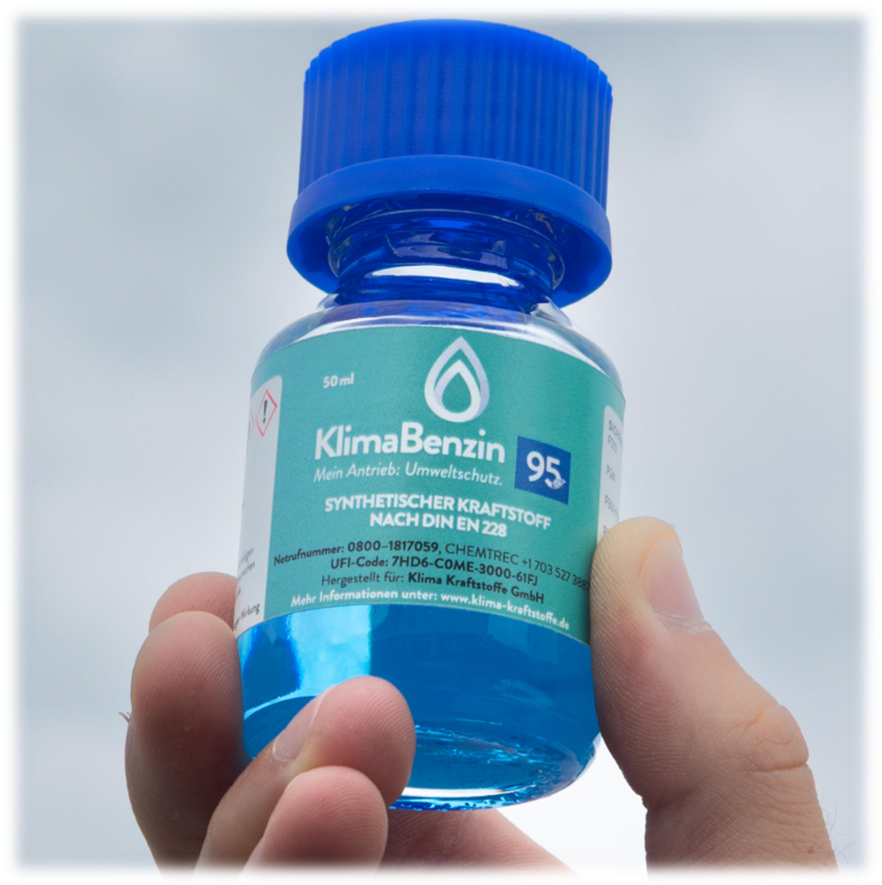
The map does not show all options for climate-friendly driving with petrol engines. E85 and pure Super E10 (without reFuel additive) are not shown! If they were, the map would include many thousands more petrol stations. However, we wish to focus on HVO, bio-naphtha and (as soon as they become available) e-fuels. E20 stations are only marked separately because Super E20 is perfectly suited as a carrier fuel for reFuels.
By the way: E20 and E27 are already standard fuels in India and Brazil, available at every petrol station. In India alone, there are 100,000 E20 stations. Brazil has a further 50,000 or so. And E15 is also widely available in the Midwestern United States. This shows once again that if you are serious about climate protection, there is no need to complain about missed climate targets. You can simply scale up the production of such ethanol-based fuels. And this is already common practice in many countries. It is also evident that the engines running on these fuels do not experience any problems. Many engines are almost identical, regardless of whether they were sold in Europe, India or Brazil. Retrospective approvals for E20 are therefore to be expected.
There are also positive signs regarding availability. For instance, the German company KlimaKraftstoffe GmbH and the Spanish petrol station chain Repsol have announced an increasing number of refuelling points. This primarily concerns the more complex bio-naphtha and biomethane-based fuels. We also expect a significant increase in supply for petrol engines. Repsol has therefore commissioned a large-scale plant in Tarragona in autumn 2025. Scaling up depends not on technical factors, but on political decisions. In the long term, however, the largest share of renewable petrol fuels will be covered by e-fuels (PtL), which can be produced in unlimited quantities at favourable locations. The regulatory framework will be adapted to accommodate this (sooner or later).
Photo on the left: Klima-Kraftstoffe GmbH
Virtual map in Google Earth:
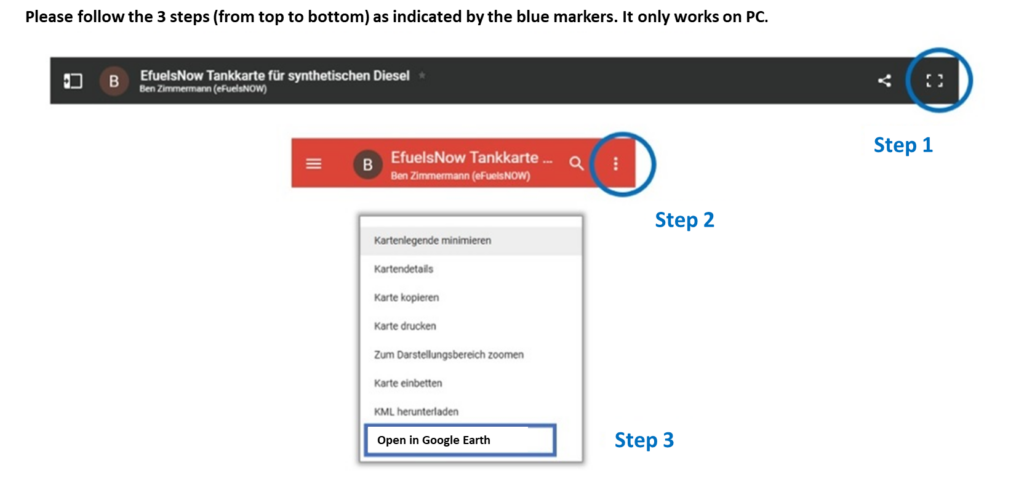
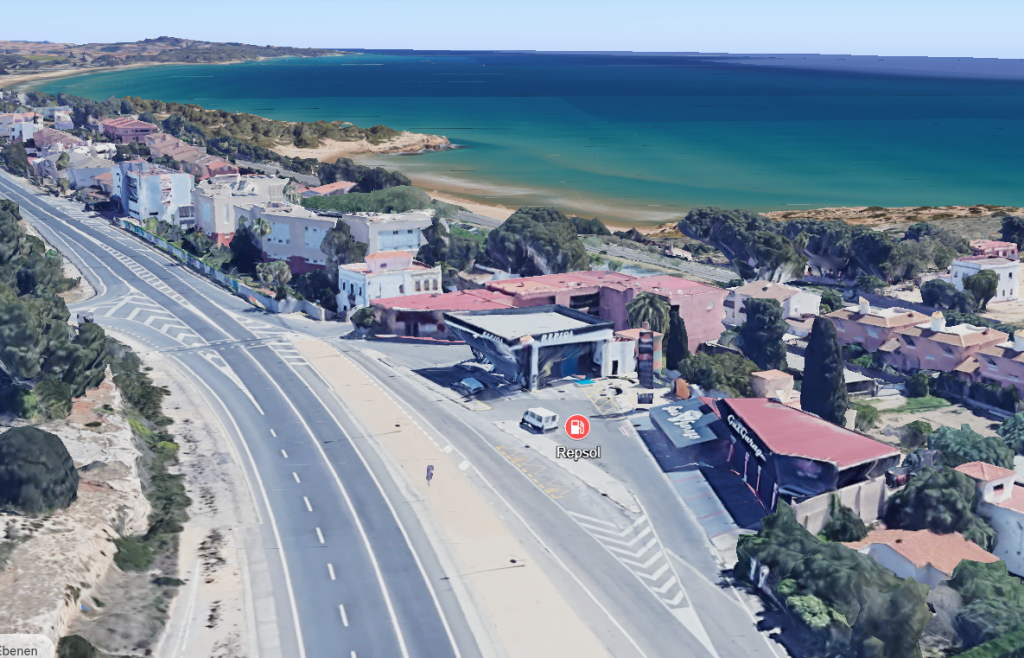
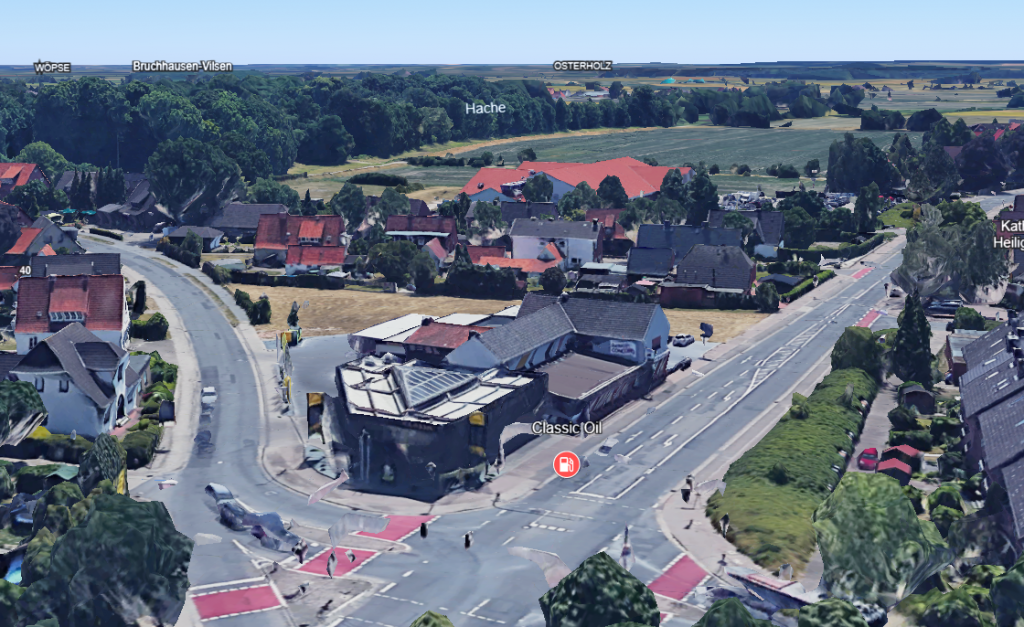
You can also see the station map in 3D using Google Earth. You can virtually fly over each individual station, just like a drone! You’ll find more detailed information about this below the station map => Link.
Please note the following points:
- Important: The map is primarily aimed at the academic and political communities. Motorists are very welcome to use it. However, finding petrol stations is only a secondary function! It was created by one person, driven by personal, intrinsic commitment and passion. My aim is to support the work of universities in raising awareness of this important issue.
- For mobile searches, we recommend the Apple and Android apps. Please make sure you read all the station information before you set off. You can find the station information by tapping the relevant icon on the map. It’s best to do this on a computer or in the app, as you’ll find some very important details there (petrol pump name, payment details, local information).
- We get all our information either from the websites of the major corporations, from data sheets, or directly from the petrol station chains themselves. Cashiers often don’t know what’s inside the fuels. We also have contacts beyond Germany’s borders. I have personally visited many petrol stations, including in North America. Nevertheless, it is not possible to provide all information (price, payment methods, technical faults, exact opening date) on a daily updated basis. This is therefore a secondary feature, of good quality, within the limits of what is feasible. We welcome your first-hand information too. Write here => info@efuelsnow.de .

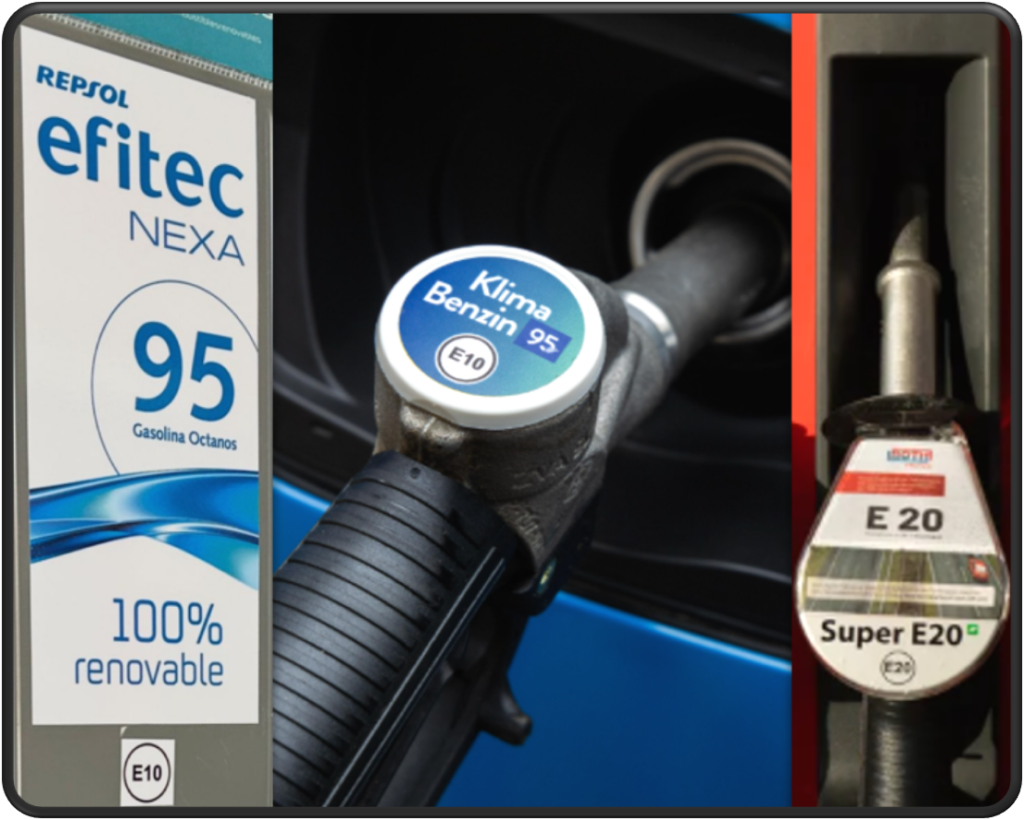
Aktuell gibt es auf dem Tankstellenmarkt regenerative reFuel Ottokraftstoffe von vier Unternehmen:
| Company / Country | Product name | Technical Overview | CO₂ reduction | Fuel standard | Estimated petrol station price (€/l) |
| ROTH (D) | E20 – ROTH | up to 20% ethanol blend, octane number: 99 RON / Infos hier | up to 20% | DIN CEN/TS 18227 | 1,70 – 1,95 |
| Klima Kraftstoffe/ Classic Tankstellen (D) | KlimaBenzin95 | E10E10 + reFuel made from green, bio-based methanol (95% renewable) RON95 | up to 90% | DIN EN 228 (because of E10) | 2,20 |
| Repsol (ES) | Efitec 95 Nexa 100% Renovable | E1E10 + bio-waste-based additive (100% renewable) RON95 | spp. 70% | DIN EN 228 (because of E10) | 1,60 – 1,95 |
Product characteristics of reFuel gasoline
Unlike with HVO, we are not aware of any differences in terms of emissions and performance, either with bio-naphtha-based fuels or with E20. As a general rule for ethanol: due to its higher enthalpy of vapourisation, more heat is extracted from the surroundings. This results in the cylinder being filled more effectively. In addition, there is a lower tendency to knock. Therefore, it is possible to extract more power from the engines.
E10 + blend of bio-naphtha / bio-methanol (DIN EN 228)
The proportion of bio-naphtha or biomethanol added is not a critical factor. What matters is the ethanol content. It is estimated that 95 per cent of all petrol-powered cars currently on the road are compatible with E10. Nevertheless, there are a few older vehicles that are not compatible with E10. While older diesel vehicles can still run on HVO, non-approved petrol engines must comply with the fuel standard. This is due to the E10 content! The reFuel component (the bionaphtha blend) is harmless.
As a general rule, all new vehicles from around 2010 onwards are compatible with E10 as standard. For vehicles built between 2000 and 2010, this applies to most models. There are even some models from the 80s and 90s that are compatible and have been officially approved by the manufacturer. Some models that haven’t been approved can still tolerate E10 but were simply not officially authorised (perhaps for cost reasons). We do not know which ones these are. If you want to be on the safe side, check the official DAT list. If you’re in doubt, it’s better to fill up with Super E5 and wait for e-fuels.
But please don’t worry about the E10 blend. With a healthy dose of common sense and a bit of research, any risk can easily be avoided. An estimated 95 per cent of all petrol cars registered today are compatible with this fuel. Checking the DAT list also provides the necessary clarity. According to experts, even a single tankful of E10 in a vehicle not approved for it should not normally cause any problems. Personally, I regard the E10 panic of the early 2010s as a ‘stirred up’ panic designed to use fear to halt the rise of renewable fuels.
Incidentally, from a technical point of view, it is no problem to develop suitable additives that make even older vehicles compatible with E10. We do not know whether such products are already available on the market. If necessary, it might be worth giving LiquiMoly a ring, for example. They have a hotline. Most eFuelsNow members drive a diesel car in their private lives or (in a few cases) a modern petrol car compatible with E10 😉 So this isn’t an issue for us. However, this question should be answered by the time proper e-fuels (PTL) are introduced at the latest. E-fuels do not contain any ethanol. Initial test drives with classic cars have already been successfully completed. E-fuels can also be used to refuel the few vehicles that are not E10-compatible. The corresponding filling stations will then also be shown on this map.
E20 + a blend of bio-naphtha and biomethanol (currently certified to the DIN CEN/TS 18227 standard)
E20 fuels are currently standardised under the DIN CEN/TS 18227 standard. The standard may still be subject to change as part of the European approval process. Experience has shown that petrol engines manufactured from 2015 onwards are compatible with this fuel. If you are unsure, please contact your manufacturer. DAT approval lists are expected to be available in the not-too-distant future. You can also find further information on this website.
This station map currently lists only petrol fuels of biogenic origin (waste and residual materials) (and no e-fuels). First-generation biofuels (such as ethanol and biodiesel) are not normally the focus of eFuelsNow. As an exception, however, we also include E20, as it is very well suited as a base fuel for future reFuels (based on bio-naphtha or e-fuels).
Illustration of the Karlsruhe Institute of Technology (KIT) (reFuels Department, Dr Toedter)
- E-fuels are produced in countries with plenty of sunshine and wind, usually in the south (analogy with oranges).
- Waste-based fuels require very little electricity, which is why they can also be produced in northern countries (analogy with apples).
Contrary to the general opinion that there are only “one or two small-scale plants” producing e-fuels, their number is now growing – see worldwide map.

The map is created by one eFuelsNow group member out of deep passion and inner conviction.
In the following text, the creator of the map explains his motivation:
As an engineer, you work with scientific principles throughout your studies and career. It’s a creative profession. As an engineer, I want to utilize all available technological possibilities for the benefit of the environment and our customers. As a passionate driver, I’ve traveled through many countries where renewable fuels like HVO have been available for years. I’ve noticed that German „climate protection“ organizations and their political representatives have been complaining about CO2 emissions from transportation for a long time. At the same time, however, they are blocking all technological solutions. This is why many people are asking serious questions. Is this even about climate protection, or is it about something else? HVO100 has been available at gas stations in Northern Europe and California since around 2013. However, it wasn’t allowed to be sold in Germany until May 2024. Technically unfounded justifications were given for this ban. Similar patterns can be seen in other areas (e.g., the years-long blockage of climate-neutral CCU/CCS power plants, or the incomplete consideration of CO2 and efficiency in vehicle propulsion systems, including vehicle and infrastructure footprints, electricity generation, etc.).
The primary purpose of the map is scientific, to assist universities in observing the tank network. At the same time, it aims to make the supposedly „non-existent refueling stations“ clearly visible to everyone. Measures to reduce CO2 emissions must be evaluated honestly again. This means focusing on energy, according to market and scientific principles. Climate protection has to do with energy, but nothing to do with powertrain systems. Every powertrain can be decarbonized. However, not every powertrain is suitable for every customer. Only an honest perspective can counteract the socialist instrumentalization of environmental protection.
And that brings us to a very, very important issue: strengthening the social market economy. The honorable cause of environmental protection must not be allowed to degenerate into a socialist bludgeon.
The photograph of the man pictured below comes from my own photo album. I know firsthand what our legendary German Minister of Economics and Chancellor Ludwig Erhard’s goal was: to provide honest help to the worker. Because in our West German capital, Bonn, they understood that honorable causes must not be exploited. The dishonest and failed counter-example from the Eastern Bloc is still well known. That is precisely why, today, we must also provide honest help to the environment (and to the worker). The word „minister“ comes from „to serve“ (Latin „ministrare“). In a market economy, the state service provider sets the goals exclusively in consultation with its client (the citizen). Customers and engineers decide individually on the path to achieving them. In market competition, the best product always wins because only application and product experts make the decisions. A counter-example: In countries with planned economies characterized by shortages, state intervention in the market was also misused as a monopoly of power („Only if you are obedient will you get what you want.“). This is diametrically opposed to the values of an enlightened Western society in the 21st century. There’s no need for rationing when there’s more green energy available globally than the world needs (see also the DLR graphs). You simply can’t save the global climate with scarcity. Environmental protection requires money and people willing to participate. Therefore, we need to return to thinking more like Ludwig Erhard. We need more tolerance for diverse technologies, as well as customer focus and a pragmatic approach. We need more. We need to return to the approach that made West Germany and Western Europe successful.
This card is dedicated to the person who taught me all these connections (my grandfather) as well as to the father of the social market economy, Ludwig Erhard (whom he knew personally).

ccording to experts such as Prof. Willner (HAW Hamburg) and the reFuels department of the Karlsruhe Institute of Technology (KIT), the feedstock potential for HVO production is still far from being exhausted. In spring of 2026, KIT published a renowned study showing that the entire European demand could be covered by waste-based fuels. This does not even take into account the additional potential of electricity-based e-fuels.
Regarding possible production volumes, here is a quote from an article by SpringerNature (including an interview with Prof Willner):
According to an estimate by the Finnish group Neste, if all waste materials were utilised and production capacity fully utilised, up to 1,000 Mt of renewable fuels could be produced annually by 2040. This corresponds to approximately 40 per cent of global transport demand (road, sea and air). These figures are also in accordance with research carried out by Professor Dr Thomas Willner from the Department of Process Engineering at HAW Hamburg. Furthermore, according to a study available to Willner, there is still significant potential for HVO production of around 200 Mt per year from jatropha. Jatropha grows in desert fringe areas on marginal soils. This quantity of HVO derived from jatropha oil could meet the fuel requirements of the entire EU. A well-developed public collection system for bio-waste that can be processed into fuels already exists in some Italian municipalities. HAW Hamburg is working on decentralised plants that can be deployed directly at waste recycling facilities. Willner also emphasises the high energy efficiency of HVO. As there is a great deal of energy in the waste, little electricity is required during production. Driving on it is therefore more energy-efficient than driving an electric car. Swedish environmental authorities even rate the fuel as having by far the greatest climate impact, as climate protection measures can be implemented immediately. HVO is the time-, cost- and resource-efficient climate protection solution for transport.
Press release from Neste on the availability of raw materials (Sources: Neste (text below the video), a presentation at the IAA Commercial Vehicles trade fair, and an article in AutoBild from August 2023)
The simple scaling of renewable fuels clearly shows that a planned-economy-style rationing of fuel for shipping and aviation is totally unnecessary. This is partly because, when aviation kerosene is produced, fuel for road transport is automatically generated as a by-product. Focusing on niche sectors within the aviation and shipping sectors would slow down the scaling up of large-scale industrial production facilities. After all, what matters to investors is a quick return on investment. Last but not least, every car driver subsidises their next flight ticket at the petrol station. As a result, the cost-sensitive aviation and shipping sectors can deliver goods more cheaply and economically.
Interviews with Prof Dr Willner can be found in the videos below. In the first clip (taken from a lecture), he discusses, amongst other things, the issue of raw materials.
E85, E100 and biogas are also key components in achieving climate targets in the transport sector. As ethanol is a first-generation biofuel and all three fuels require vehicle modifications, we have not included them here. If we had marked all renewable fuels for petrol engines on the map, the refuelling network would already be very dense. There are more solutions than is commonly claimed and than the ‘transport revolutionaries’ would like 😉 However, we are focusing on approaches that can be implemented without technical retrofits. And in this regard, reFuels such as HVO, waste-based petrol and e-fuels are the simplest route.
You can find more information about these two fuels at our virtual filling station. We have also included a video report from Bayrischer Rundfunk on the subject of biogas, as well as a map of filling stations, which includes a large number of biogas filling stations.
The map (including the website and app) is freely available for searching for petrol stations and as a source for academic and journalistic purposes (source: eFuelsNow e.V.). You are welcome to link to our website. The reuse of the map data in other applications and its distribution to third parties is strictly NOT permitted. If you have any further questions, please contact us at info@efuelsnow.de
Copyright and database protection:
Die in dieser App/auf dieser Webseite bereitgestellten Inhalte, insbesondere die Zusammenstellung, Strukturierung und tägliche Aktualisierung der Tankstellendaten für HVO100, HVO Beimischungen und reFuels, sind geistiges Eigentum von eFuelsNow e.V. Die Karte kann zur Suche von Tankstellen und als Quelle für wissenschaftliche und journalistische Zwecke eingesetzt werden (Quelle : eFuelsNow e.V.). Die Weiterverwendung der Karten-Daten in anderen Applikationen und die Weitergabe an Dritte ist nicht gestattet.
Database producers’ rights (Section 87a et seq. of the German Copyright Act (UrhG)):
This map constitutes a database within the meaning of the Copyright Act. The creation, verification and ongoing maintenance of the data required a significant investment of time and resources. The extraction or re-use of substantial parts of this database (e.g. through ‘scraping’ or automated queries) is not allowed.
Restrictions on use:
Use of the data is permitted solely for private, personal use. Any commercial use, the integration of the map data into third-party systems (e.g. fleet management systems, navigation apps) or the commercial resale of the location information requires a separate licence agreement..
3. Technical protection
We reserve the right to take technical measures to prevent unauthorised access and, in the event of misuse, to take legal action and claim damages.
Way to go to the 3D map