ReFuels are highly compatible fuels. For some products, it’s necessary to verify engine type approval. Others (for example, HVO) can be used without any problems, even without type approval. You’ll find more information in the following sections.
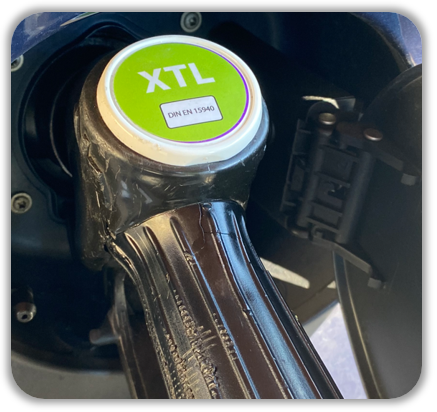
HVO is a synthetic diesel fuel. It is not biodiesel (FAME)! HVO is a highly compatible fuel and can be used without any problems, even in vehicles not specifically designed for this type of fuel. This applies to 99% of registered diesel vehicles. The remaining 1% can also use it with some restrictions. The inventor of this fuel, the Finnish company Neste, also emphasizes the compatibility of its product with all diesel engines. This aligns with our years of experience at eFuelsNow. HVO is a highly compatible fuel, available at service stations since around 2013. Therefore, we have considerable experience with this fuel. In some countries, it is already impossible to find diesel without HVO. In Norway, up to 45% HVO is already blended into standard diesel. In California, more than half of the diesel market is already composed exclusively of HVO. The goal is to decarbonize the entire diesel market by 2030. We are receiving only positive reports from these countries. HVO100 is marketed in Europe in accordance with the DIN EN 15940 standard. This fuel meets and exceeds the requirements of conventional diesel (DIN EN 590 standard). The only difference lies in its density, which is 6% lower. Experience shows that the difference in fuel consumption is approximately +/- 0.1 liters/100 km, depending on the type of vehicle. In accordance with the DIN EN 15940 standard, it contains lubricating additives that offer similar, and in some cases even superior, lubricating properties to fossil diesel. Free of aromatic compounds, HVO burns with fewer emissions and contributes to engine cleanliness.
Here is some clarification regarding the 1% of diesel vehicles compatible with HVO100, subject to certain limitations. This primarily concerns vehicles whose engine control unit (ECU) has been reprogrammed. As these adjustments are highly customized, we cannot comment on this specific case. In rare cases, leaks may occur on very old diesel vehicles (pre-1995). Aromatic additives were required on new vehicles for the first 1,000 kilometers to swell the rubber seals. These now older vehicles have all run on fossil fuels. We are only aware of one or two cases of sealing problems. Replacing the seals is generally inexpensive, and this type of repair is often necessary on older vehicles. Older vehicles, up to around the year 2000, are equipped with a mechanical diesel injection pump. In this case, adjusting the injection timing can be advantageous, which improves engine performance. It is also reported that pre-ignition phenomena can occur in some pre-chamber diesel engines. We are not aware of any such cases, but universities like KIT are conducting research on this topic. A Mercedes W123 used by eFuelsNow has been running on HVO100 for years without any problems. This vehicle would normally no longer be able to use the current B7 standard diesel, as its engines were certified according to the old German standard until 1993. Yet, these vehicles run perfectly. And the same is true with HVO. Conclusion: more than 99% of certified diesel engines tolerate HVO100 without any issues.
Why aren’t all diesel vehicles approved for HVO? The older vehicles have already been sold. Besides, HVO works perfectly well. What’s the point of retroactive approval? Furthermore, the approval process requires complex and expensive testing. And for legal reasons, official approval can only be granted after practical testing has been completed. So there are formal and legal reasons. This retroactive approval hasn’t been practiced in the past. For example, when the German standard for diesel engines, DIN 51601, was replaced by DIN EN 590 in 1993, older vehicles weren’t recertified. Technology evolves, and so do fuel standards.
HVO certification is only valid during the warranty period. However, most new diesel vehicles already have manufacturer certification. The reFuel Institute at the Karlsruhe Institute of Technology (KIT) also conducted an 800,000 km endurance test in freight transport using HVO100, with excellent results.
The video below shows the examination of an engine after 60,000 km of operation on HVO.
Currently, only E10 gasoline is available, which also contains an additional reFuel component (e.g., E10 + 23% bionaphtha). The reFuel component is very compatible. However, you must ensure your engine is compatible with E10 gasoline. Therefore, please check your vehicle’s compatibility with gasoline fuels according to DIN EN 228. Most modern gasoline-powered passenger cars can use this fuel (approximately 95%). Consult your vehicle’s owner’s manual or contact the manufacturer. No specific recommendation can be given for other vehicles. There are reportedly some vehicles that can tolerate E10 in practice. We do not know exactly which ones. Apparently, there are also additives (e.g., from Liqui Moly) that can make such vehicles compatible with E10. For more information, please contact Liqui Moly directly, specifying your vehicle and the type of fuel you wish to use.
Electricity-based e-fuels (e-gasoline and e-diesel) are not yet available at gas stations. Due to the absence of a fixed crude oil reference point, these fuels can be perfectly tailored to the engine (designer fuels). Consequently, perfect compatibility can be expected. This opens up unprecedented development potential (the perfect engine for the perfect fuel).
These are esterified biodiesel (FAME) and ethanol. These fuels are only considered briefly here, as they no longer represent the latest state of the technology. However, they are occasionally added in small quantities. Biodiesel and ethanol are significantly more aggressive towards metal surfaces and plastic materials. The maximum permissible blend specified by the vehicle manufacturer must be strictly observed. In rare cases, vehicles were also factory-prepared for biodiesel and ethanol use. However, we are assuming the standard, commercially available vehicle configurations here.
Conclusion:
- Diesel engines certified in the USA should normally tolerate up to 20% biodiesel according to American standards (however, always observe the manufacturer’s specifications!).
- Diesel vehicles approved in Europe can normally tolerate a maximum of 10-15% biodiesel (FAME) (observe manufacturer’s specifications!).
- Approximately 95% of all petrol-powered vehicles registered in Europe are compatible with E10 in accordance with DIN EN 228 (however, it is essential to follow the manufacturer’s specifications!).
- E20 can be used in most petrol-powered vehicles (manufactured from 2015 onwards). In Europe, it is currently certified to the DIN CEN/TS 18227 standard. The fuel is expected to be rolled out across Europe. At that point, the standard designation is likely to change. We expect that, at that point, corresponding approval lists will also be available online. It is essential that you check the approval status. If in doubt, please contact your engine manufacturer.